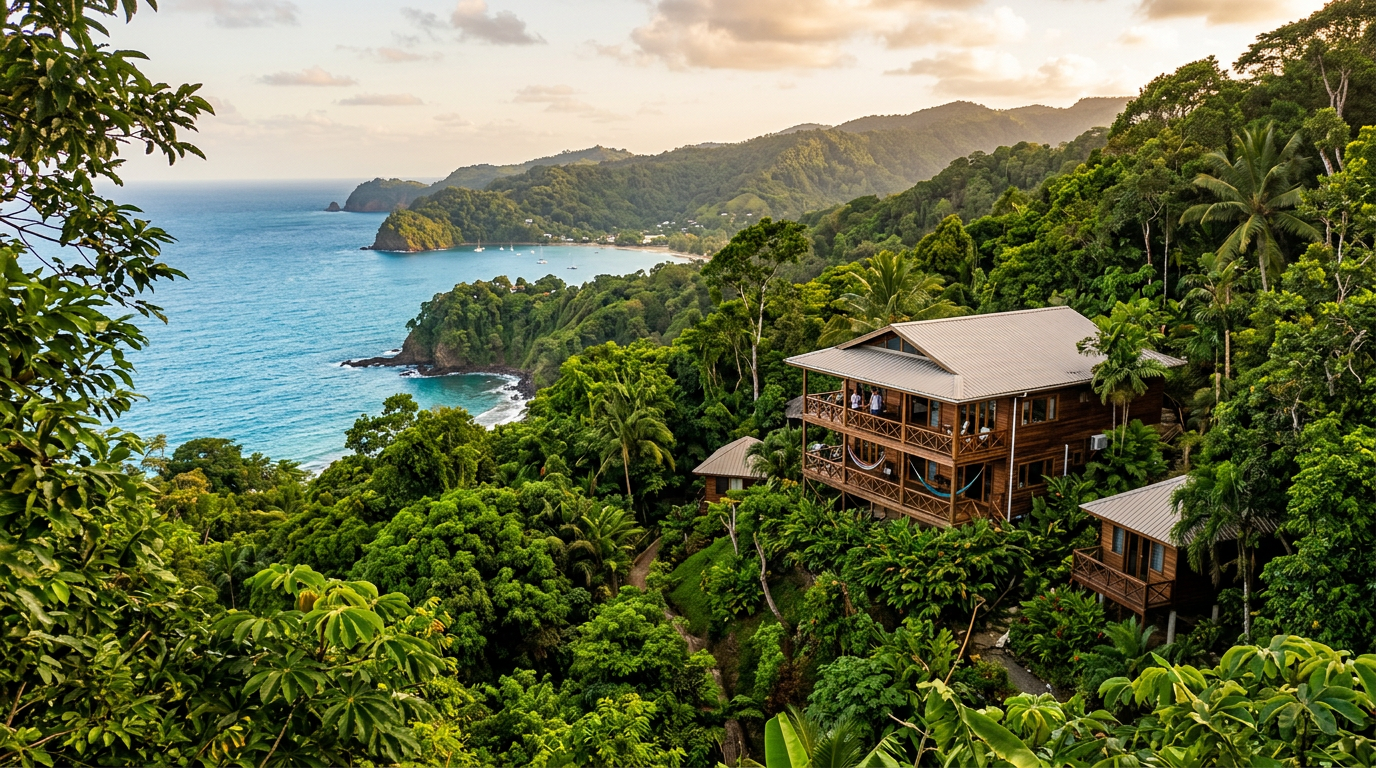
Tobago is positioning itself as the Caribbean's eco-tourism leader—and property investors should pay attention. With government backing, growing international demand for sustainable travel, and a natural landscape that's practically purpose-built for eco-tourism, the island is entering a new era of development. The question isn't whether eco-tourism will transform Tobago's property market. It's whether you'll position yourself to benefit from it.
What Is Eco-Tourism, and Why Does It Matter?
Eco-tourism is sustainable travel that emphasizes conservation, local community benefit, and minimal environmental impact. It's not just "nature tourism"—it's tourism done right, with purpose.
Eco-tourists are typically higher-spending visitors than mass-market beach tourists. They stay longer, spend more per night, and actively seek out sustainable, locally-owned accommodations. They hike rainforests, dive pristine reefs, and bird-watch with serious intent. And crucially, they'll pay 10–20% premium rates for verified sustainable properties.
For a small island like Tobago, this model is transformative. Instead of competing on price with mega-resorts in larger Caribbean destinations, Tobago competes on authenticity, environmental integrity, and genuine local experience. That's a market position that drives sustained property value.
Why Tobago Is Perfectly Positioned for Eco-Tourism
Tobago didn't randomly choose eco-tourism as a development focus. The island has assets that few other destinations can match:
Main Ridge Forest Reserve: 250 Years of Protection
Tobago's Main Ridge Forest Reserve, established in 1776, is the oldest legally protected rainforest in the Western Hemisphere. Let that sink in. While most Caribbean rainforests were cleared centuries ago, Tobago's remained protected through generations. That 6,000-hectare forest reserve is now a UNESCO-recognized biodiversity hotspot and the centerpiece of Tobago's eco-tourism strategy.
Buccoo Reef and Marine Biodiversity
Tobago's Buccoo Reef is one of the few naturally occurring reef systems in the southern Caribbean and is recognized by UNESCO as a site of international importance. The reef supports vibrant coral gardens, tropical fish, and marine life that attracts serious divers and snorkelers from around the world. For eco-tourists, this is non-negotiable infrastructure.
40+ Hummingbird Species and World-Class Birdwatching
Tobago is home to over 260 bird species, including 40+ hummingbird species—among the highest concentrations globally. The island is a pilgrimage site for birdwatchers and nature photographers. Leatherback turtles nest on Tobago's beaches, drawing naturalists and conservationists. These aren't niche attractions; they're world-class assets that generate sustained visitor traffic and premium pricing.
Small Island Scale: Manageable Development
At roughly 303 square kilometres, Tobago is small enough that development can be carefully planned and environmentally managed. Unlike larger Caribbean islands where sprawling resort development has degraded natural areas, Tobago can maintain strict environmental standards while still attracting quality visitors. The National Tourism Policy 2021–2030 commits Tobago to sustainable, controlled tourism growth—not boom-and-bust development.
Green Key Certification: The Market Differentiator
One of the most concrete signs of Tobago's eco-tourism momentum is the rapid uptake of Green Key certification—an internationally recognized standard for sustainable hospitality. Seven Tobago properties are now Green Key certified, including:
- Castara Retreats (Windward Coast)
- Hibiscus Heights (Speyside)
- Adventure Eco Villas (Charlotteville)
- Bananaquit Vacations
- House of Grace
- Tropical Apartments
- Shepherds Inn
Green Key certification carries significant market weight. International travel platforms (Booking.com, TripAdvisor, Airbnb) prominently display Green Key badges, driving booking premiums. For property owners, certification can increase nightly rental rates by 15–25% compared to non-certified properties in the same area.
How Eco-Tourism Drives Property Values
The pathway from eco-tourism growth to property appreciation is direct:
Rising Visitor Numbers = Sustained Rental Demand
Tobago welcomed approximately 50,000 cruise ship visitors and 35,000+ stay-over visitors in 2024, with projections for 15–20% annual growth through 2027. More visitors means more demand for accommodation, particularly mid-range vacation rentals and boutique eco-lodges (the segments eco-tourists prefer). That demand translates to occupancy and rate stability for property owners.
Premium Pricing for Sustainable Properties
Market data across the Caribbean consistently shows that eco-labeled properties command 10–20% higher nightly rates than comparable properties without certification. A three-bedroom villa in Castara that might rent for TT$3,500/night with Green Key certification could command TT$3,850–$4,200/night. Over a 60–70% annual occupancy rate, that difference compounds to significant additional annual revenue.
Government Infrastructure Investment
Tourism-driven development has triggered public investment in Tobago's infrastructure. Airport improvements, road rehabilitation, utility expansion, and telecommunications upgrades are all underway or planned. Better roads and utilities directly increase property values—both for personal use and for rental potential.
International Brand Awareness
Tobago's eco-tourism positioning is backed by government marketing campaigns and partnerships with international eco-tourism networks. The island is increasingly featured in sustainable travel publications, eco-tourism websites, and luxury travel platforms. This visibility attracts a new wave of conscious travelers who seek authentic, environmentally responsible experiences.
Zoning Protections Preserve Natural Beauty
Tobago's environmental protections (coastal protection zones, forest reserves, marine protected areas) limit over-development. While this might seem restrictive, it's actually protective of property values. Your ocean view, your forest backdrop, and the natural environment that drew you to the property in the first place remain protected. In the long term, scarcity of unspoiled tropical real estate drives value appreciation.
Property Hotspots Benefiting from Eco-Tourism
Castara & the Windward Coast
Castara, a picturesque fishing village on Tobago's north coast, has become the epicenter of eco-tourism development. The village's authentic charm, nearby hiking trails, and protected beach have attracted eco-conscious investors and travelers. Land prices in Castara have appreciated 8–12% annually over the past three years, with momentum expected to continue.
Speyside: Diving Tourism Hub
Speyside is emerging as Tobago's premier diving destination, with Little Tobago island offering world-class reef diving just offshore. Boutique eco-lodges and vacation rentals targeting diving tourists are outperforming market averages. Properties within walking distance of dive shops and the pier command premium rental rates.
Charlotteville: Adventure Tourism Gateway
This remote northeastern fishing village is attracting adventure tourists seeking "real" Caribbean village life. Hiking to Pigeon Peak, kayaking in the local lagoon, and connecting with local fishermen appeal to eco-conscious travelers. Property values are rising as international investors recognize Charlotteville's potential and scarcity.
Main Ridge Surrounds: Nature Retreat Premium
Properties in proximity to the Main Ridge Forest Reserve—particularly properties with forest views, direct forest access, or locations along trekking routes—are commanding premium prices. Eco-tourists view forest-adjacent properties as the ideal Tobago experience, and prices reflect that demand.
Investment Opportunities in Tobago's Eco-Tourism Boom
Eco-Lodge & Boutique Hotel Development
Demand for mid-range eco-lodges (8–15 rooms) significantly outpaces supply. Investors with land on the north coast can develop small eco-lodges with financing advantages and higher returns than standard vacation rentals. Green Key certification is achievable for purpose-built lodges and adds immediate market value.
Retrofit Traditional Properties for Green Certification
Existing homes and small guest houses can be retrofit to Green Key standards at reasonable cost. Solar installation, water conservation systems, local procurement partnerships, and community engagement are the primary requirements. A 4-room property retrofitted for Green Key can move from TT$2,500/night to TT$3,000+ virtually overnight.
Land Banking in Eco-Tourism Corridors
The north coast, particularly Castara, Charlotteville, and the approaches to Speyside, represents significant medium-term appreciation potential. Land prices are still rational compared to comparable Caribbean destinations, but they're rising steadily. Purchasing now and developing or reselling in 3–5 years is a viable strategy for investors with patient capital.
Vacation Rental Properties with Eco-Marketing
Standard vacation rentals marketed with "sustainable stay" messaging, partnered with eco-tourism booking platforms, and certified (or certifiable) for environmental standards can achieve above-market occupancy and rates. The marketing repositioning costs little, but the income impact is measurable.
The Honest Reality: Growth Is Real, but Gradual
We believe Tobago's eco-tourism trajectory is genuine. But we also believe in setting realistic expectations.
Don't Expect Overnight Returns
Eco-tourism growth will drive property appreciation, but not at explosive rates. Expect 5–10% annual appreciation in prime eco-tourism areas over a 5–10 year horizon. If you're looking for quick flips, Tobago eco-tourism properties aren't the play. If you're looking for steady, sustainable value growth backed by genuine market fundamentals, they are.
Infrastructure Still Developing in Rural Areas
Castara, Charlotteville, and remote north coast properties offer authentic eco-tourism experiences precisely because they're not fully developed. But roads are still narrow, internet is still sometimes unreliable, and utility services can be interrupted seasonally. These are trade-offs, not show-stoppers, but they're worth understanding before investing.
Environmental Regulations Are Tightening
As eco-tourism grows, environmental protections become stricter. Coastal setbacks, forest buffer zones, and development density limits are actively enforced. This protects your investment in the long term, but it may limit what you can build on a particular parcel. Check zoning and environmental restrictions carefully before purchasing land.
Access Can Be Seasonal
The north coast roads can deteriorate during heavy rainy season. Some properties have limited water pressure during dry season. While these issues are manageable for permanent residents, they can impact vacation rental operations. Plan accordingly.
The Numbers: Tobago Tourism Is Growing
Here's what the data shows:
| Year | Stay-Over Visitors | Cruise Visitors | Hotel Occupancy |
|---|---|---|---|
| 2022 | ~28,000 | ~35,000 | 62% |
| 2023 | ~32,000 | ~42,000 | 68% |
| 2024 | ~35,000 | ~50,000 | 71% |
| 2025 (proj.) | ~39,000 | ~58,000 | 74% |
Stay-over visitors (who require overnight accommodation) are growing faster than cruise visitors and are the primary driver of accommodation demand. Stay-over growth is outpacing Tobago's accommodation supply, which indicates sustained upward pressure on nightly rates.
Where We See the Most Opportunity
Next Steps: Exploring Tobago Eco-Tourism Property
If eco-tourism properties interest you, start by visiting Castara, Charlotteville, and Speyside. Spend time in these communities. Talk to current property owners and rental managers. Understand what the property experience looks like during rainy season and dry season. Then browse available properties with us to understand what's achievable in your budget range.
For additional context, read our guides to earning rental income from Tobago property, current Tobago property prices, and our complete guide to buying property in Tobago. We also recommend exploring our best beaches for property investment to understand coastal property options.
Explore Tobago Investment Properties
Eco-tourism properties, beachfront homes, forest retreats, and land in growth corridors. Tell us what you're looking for, and we'll put together a personalised investment shortlist.
Browse Available PropertiesOr contact us directly to discuss your investment strategy: Get in Touch | Explore Land Opportunities